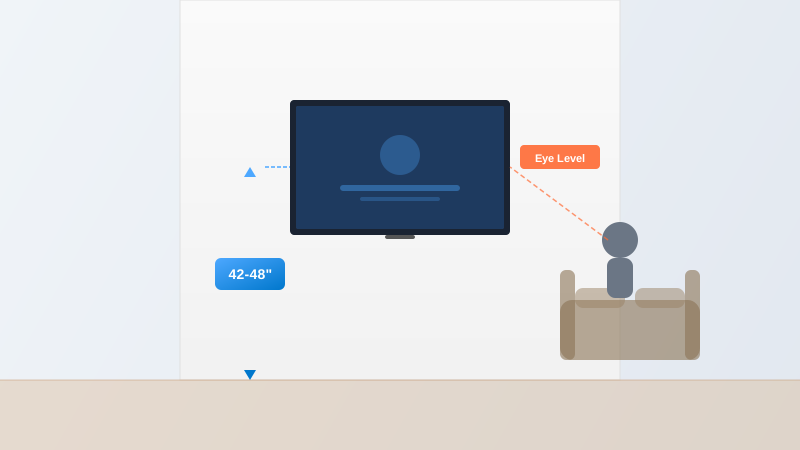
Getting the mounting height right makes a bigger difference to your viewing comfort than most people expect. Too high and you're craning your neck. Too low and it feels odd from the sofa. After mounting thousands of TVs across Essex over the past 30 years, Roger has a straightforward approach that works in virtually every room.
The Basic Rule: Centre of Screen at Eye Level
When you're seated in your normal viewing position, the centre of the TV screen should be roughly at your eye level. For most adults sitting on a standard sofa, that puts the middle of the screen at 42 to 48 inches (107–122 cm) from the floor.
The easiest way to find this is to sit on your sofa in your usual position, look straight ahead at the wall, and have someone mark the spot your eyes naturally rest on. That mark is where the centre of the screen should go.
This isn't about being precise to the millimetre. Anywhere in that 42–48 inch range will feel comfortable. The goal is to avoid the screen being so high that you're looking up at it, which causes neck strain over long viewing sessions.
TV Size and Mounting Height
The centre-of-screen rule stays the same regardless of TV size, but the bottom edge of the TV changes significantly. Here are some practical measurements assuming a centre height of 45 inches:
| TV Size | Bottom Edge Height | Metric |
|---|---|---|
| 43-inch | ~34 inches | 86 cm |
| 50-inch | ~33 inches | 84 cm |
| 55-inch | ~31 inches | 79 cm |
| 65-inch | ~29 inches | 74 cm |
| 75-inch | ~27 inches | 69 cm |
All measurements assume the screen centre is at 45 inches from the floor.
As you can see, larger screens need to sit with their bottom edge quite close to any furniture below. If you have a media unit beneath the TV, check that the bottom of the screen will clear it before committing to a mounting position.
Mounting Above a Fireplace
Above a fireplace is one of the most popular mounting positions we're asked for. It looks great — the TV becomes a natural focal point above the mantelpiece — but it does mean the screen sits higher than the ideal eye-level position.
In practice, the bottom of the TV usually sits 6 to 12 inches (15–30 cm) above the mantel or top of the fireplace surround. This is a compromise: close enough to keep the viewing angle reasonable, with enough gap to look proportionate and avoid excessive heat from below.
To compensate for the extra height, we strongly recommend a tilting bracket that angles the screen 5–10 degrees downward. This directs the picture towards your seated position rather than straight out across the room, which makes a noticeable difference to comfort and reduces glare from ceiling lights.
Bedroom Mounting Height
Bedrooms are the exception to the eye-level rule. Most people watch TV in bed while propped up on pillows, which means their eye line is higher and angled slightly upward compared to sitting on a sofa.
Smaller screens (32 to 43 inches) are common in bedrooms and their lighter weight gives more flexibility with bracket choice and wall type.