

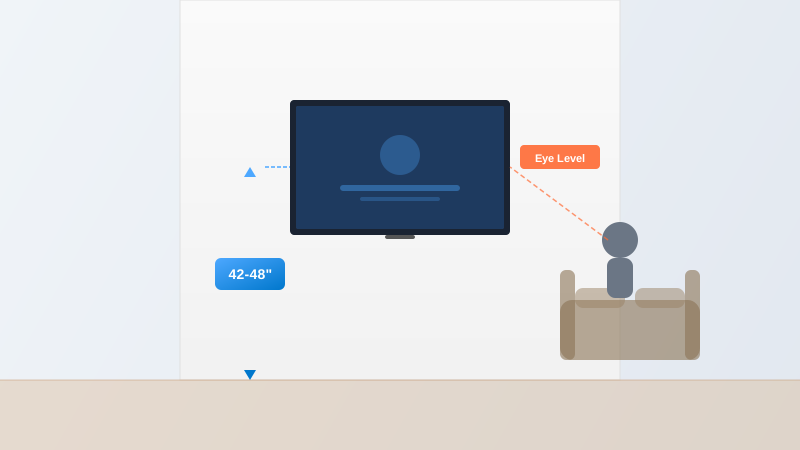
The Short Answer
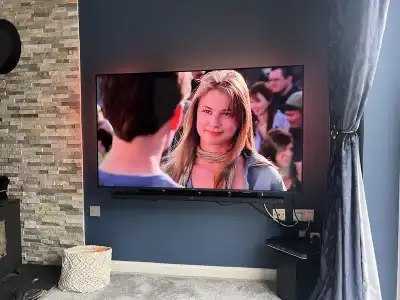
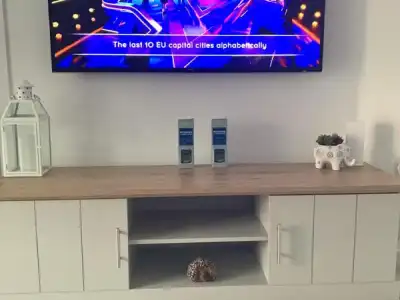
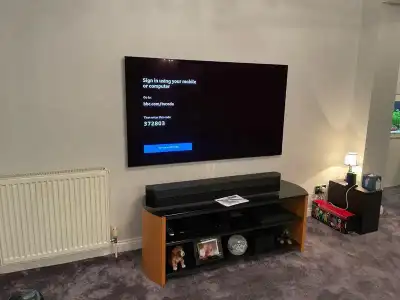
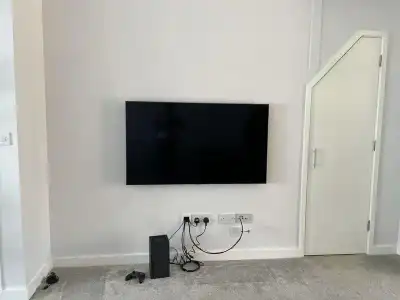
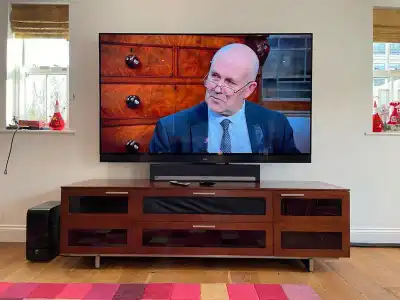
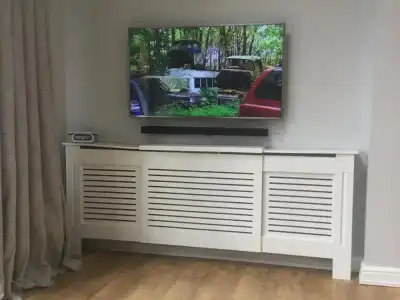
The centre of your TV screen should sit at seated eye level, which for most people is 42 to 48 inches (107 to 122 cm) from the floor. This puts the middle of the screen roughly level with your eyes when you're sitting normally on a sofa. It sounds simple, but the right height depends on your room, your seating, your TV size, and whether you're mounting above a fireplace or in a bedroom.
Why Does TV Mounting Height Matter?
A TV mounted too high is the most common mistake we see. It happens because people judge the position while standing, then sit down and realise the screen is above their comfortable viewing angle. Watching a screen that's too high for extended periods causes neck strain, shoulder tension, and eye fatigue. You end up tilting your head back by 15 to 20 degrees, which is fine for five minutes but miserable for a two-hour film.
Mounting too low is less common but creates its own problems. If the bottom of the screen is below sofa seat height, glare from overhead lights becomes worse and the TV is vulnerable to being knocked by children, pets, or a vacuum cleaner.
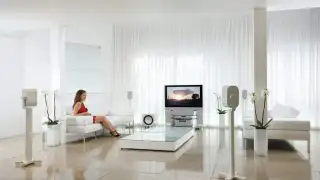
The goal is a position where you can look straight ahead from your normal seated posture and your eyes meet the centre of the screen without any effort.
What Height for Each Room?
Living Room
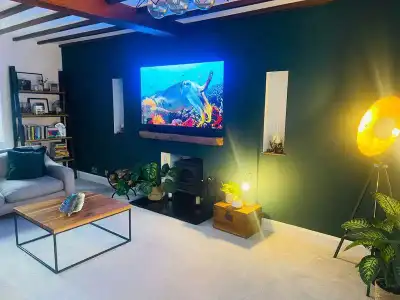
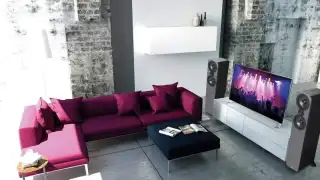
Most living room sofas have a seat height of around 17 to 19 inches. Add the height of a seated person's eye line (roughly 24 inches above the seat) and you get an eye level of about 41 to 43 inches from the floor. Allow for a slightly reclined posture and the sweet spot is 42 to 46 inches to screen centre.
If your sofa is deeper or lower than average (some corner sofas and reclining sofas sit at 15 to 16 inches), drop the TV by 2 to 3 inches. If you have a higher, firmer sofa, add 2 inches.
Bedroom
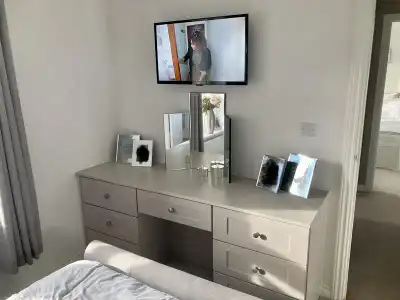
In a bedroom, you're usually watching from a semi-reclined position propped up on pillows. Your eye level drops significantly compared to sitting upright on a sofa. The ideal centre height for a bedroom TV is 36 to 42 inches from the floor, depending on bed height and how you sit.
A tilting bracket is particularly useful in bedrooms. It lets you angle the screen downward slightly, which compensates for the lower viewing angle and reduces ceiling light reflections.
Kitchen
Kitchen TVs are typically watched while standing at a worktop or sitting on a bar stool, both of which put your eye level much higher. The ideal centre height is 48 to 55 inches from the floor. Corner positions work well in kitchens where wall space is limited.
Above a Fireplace
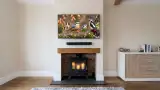
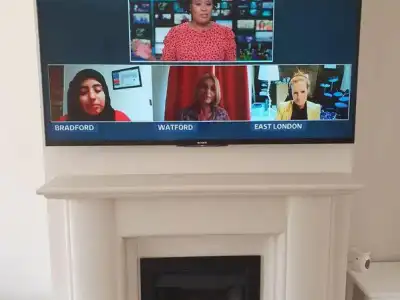
Mounting above a fireplace puts the TV higher than the ideal seated eye level. It's a popular position because the chimney breast is the natural focal point of the room, but it does involve a compromise on viewing angle.
The bottom of the TV should sit 6 to 12 inches above the mantel (or the top of the surround if there's no mantel). A tilting bracket angled 5 to 10 degrees downward is strongly recommended. This reduces the upward viewing angle and cuts glare from windows or overhead lighting.
For fireplaces that are regularly used (log burners, gas fires), heat is a factor. Most modern TVs are fine up to about 35 to 40 degrees Celsius, and a clearance of 12 inches above the heat source is normally sufficient. We always check with a temperature reading before fixing the bracket.
TV Size Chart: Centre Height and Bottom Edge
The centre of the screen is what matters, not the bottom edge. But knowing where the bottom edge will land helps you plan around furniture, mantels, and sockets. This table assumes the screen is centred at 45 inches (a good default for most living rooms).
| TV Size | Screen Height | Centre at 45" | Bottom Edge | Top Edge |
|---|---|---|---|---|
| 43" | 21" (53 cm) | 45" | 34.5" | 55.5" |
| 50" | 25" (63 cm) | 45" | 32.5" | 57.5" |
| 55" | 27" (69 cm) | 45" | 31.5" | 58.5" |
| 65" | 32" (81 cm) | 45" | 29" | 61" |
| 75" | 37" (94 cm) | 45" | 26.5" | 63.5" |
| 85" | 42" (106 cm) | 45" | 24" | 66" |
Measurements are approximate and based on 16:9 aspect ratio screens. Actual dimensions vary slightly by manufacturer. Centre height can be adjusted 2 to 3 inches up or down based on your seating height.
How Do You Measure the Right Height?
Here's the method we use on every installation:
- Sit where you'll watch. Get comfortable in your normal viewing position on the sofa, bed, or chair.
- Have someone mark your eye level on the wall. A small piece of tape at the point directly ahead of your eyes.
- That mark is your target centre height. The middle of the TV screen goes at that point.
- Work out the bottom edge. Take the screen height of your TV (from the table above or measure it yourself), divide by two, and subtract that from the centre mark. That's where the bottom of the screen will sit.
- Check clearance. Make sure the bottom edge clears any furniture, mantels, or radiators below, and the top edge doesn't crowd a ceiling or coving.
What If the Height Isn't Perfect?
Sometimes you can't hit the ideal height. A fireplace mantel is in the way, a socket is in the wrong place, or the wall construction limits where fixings can go. In those situations, a tilting bracket is the solution. It lets you angle the screen 5 to 15 degrees downward, which compensates for a few inches of extra height.
For more extreme height differences, a full-motion bracket allows you to pull the TV away from the wall and angle it in any direction. These are particularly useful for corner-mounted TVs or rooms where you watch from different seating positions. See our bracket selection guide for more on bracket types.
Want It Done Properly?
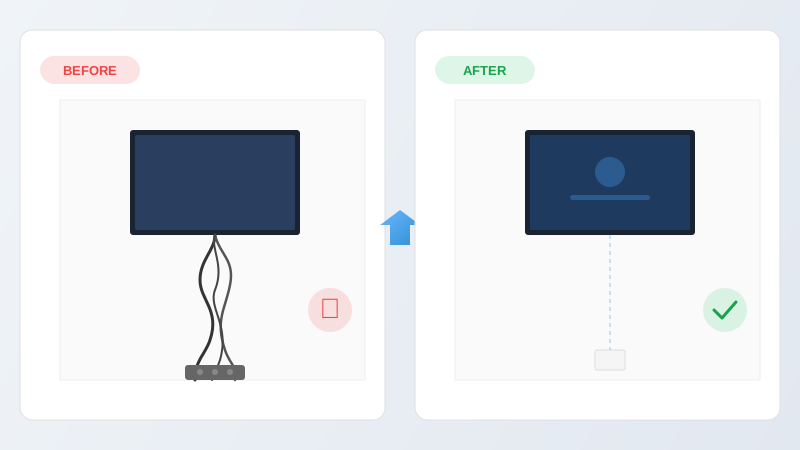
Getting the height right is one part of a good installation. The bracket type, wall fixings, and cable concealment all matter too. We handle the lot, from surveying your wall to routing cables out of sight.
Based in Tiptree near Colchester, we cover all of Essex. TV wall mounting starts from £100. Call Roger on 07860 645446 or get a free quote.