



The Short Answer
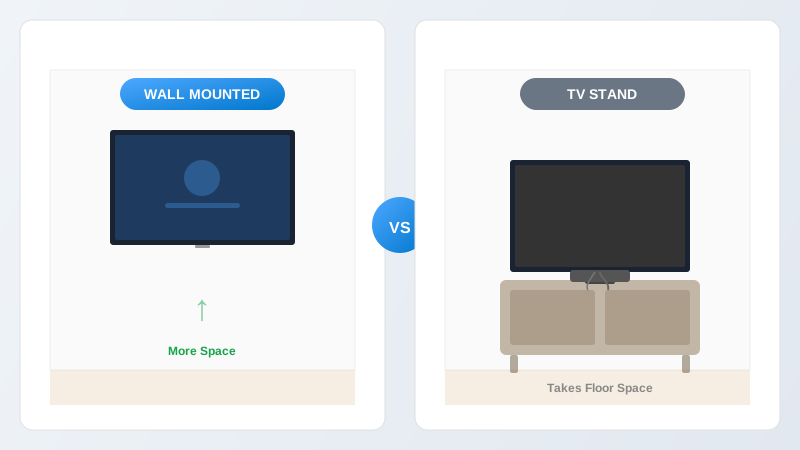
Wall mounting saves space, looks cleaner, and is safer with children. A TV stand is more flexible, needs no drilling, and works in any rental. For most living rooms, wall mounting with concealed cables gives the better result. But the right choice depends on your room, your wall, and how often you rearrange furniture.
What Are the Six Factors That Matter?
Every room is different, and there's no single right answer. Here's how the two options compare across the things people actually care about.
1. Space
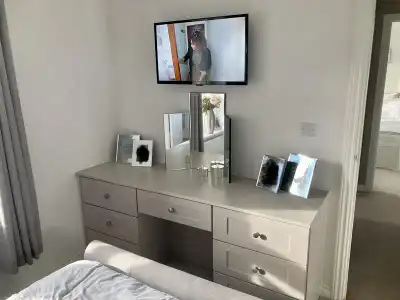
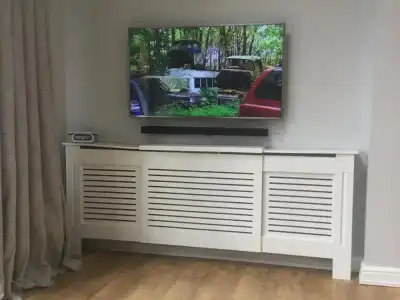
Wall mount wins. A wall-mounted TV sits flush (or close to flush) against the wall. There's no furniture underneath unless you choose to put something there. In a small room, this can free up significant floor space and make the room feel noticeably bigger.
A TV stand or media unit typically extends 35 to 50 cm from the wall and runs 100 to 180 cm wide. That's a meaningful footprint in a compact living room, especially once you add clearance for doors and walkways.
2. Aesthetics
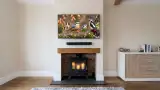
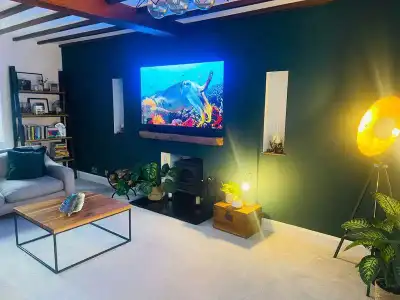
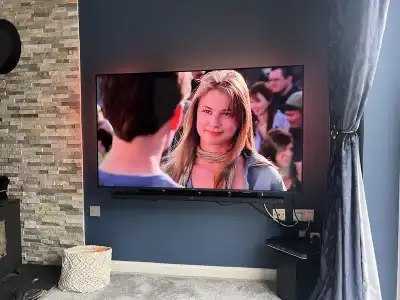
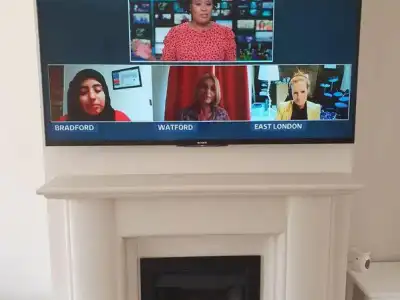
Wall mount wins, with a caveat. A properly mounted TV with concealed cables looks sharp and modern. The screen appears to float on the wall. It's the finish you see in hotel rooms, show homes, and interior design magazines.
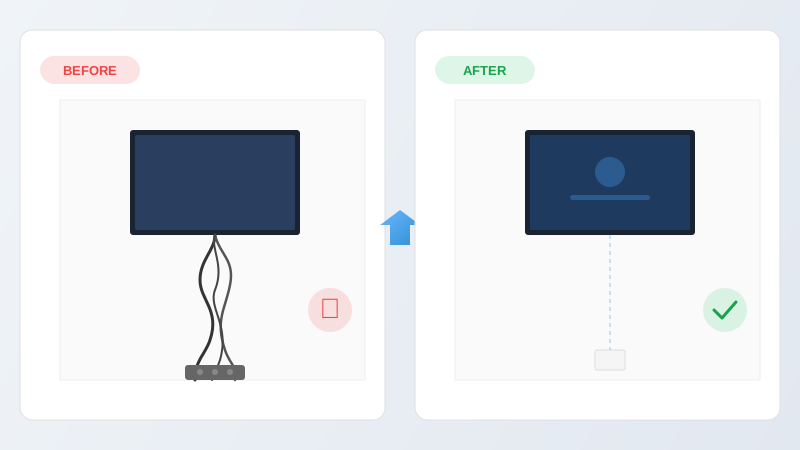
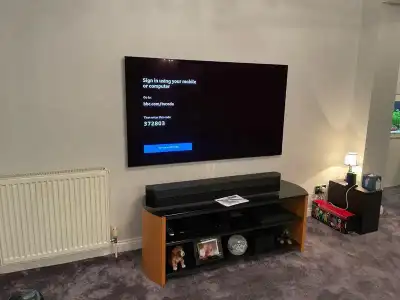
But a badly mounted TV with cables dangling down to the skirting board looks worse than a TV on a nice stand. The quality of the installation matters as much as the mounting method. If you're not going to conceal the cables, a stand with built-in cable management may actually look tidier.
3. Cable Management
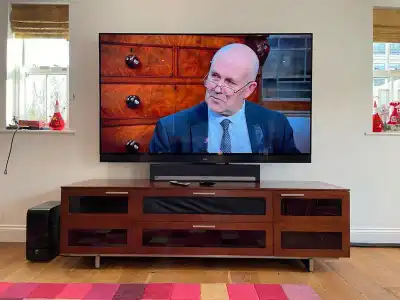
Depends on the installation. A TV stand typically has channels or holes in the back for cables to pass through, keeping them hidden behind the unit. It's simple and effective.
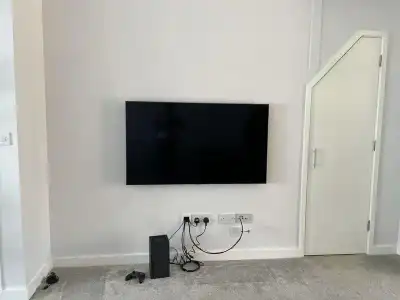
A wall-mounted TV needs cables dealt with separately. The best approach is chasing them into the wall and plastering over, which makes them completely invisible. The cheaper approach is surface-mounted trunking, which is tidy but not invisible. See our cable hiding guide for all five methods compared.
4. Safety
Wall mount wins clearly. A wall-mounted TV cannot be pulled over, pushed off, or climbed on. There's no furniture for toddlers to scale and no cables at ground level for pets to chew.
A TV on a stand can topple forward if pushed or if a child climbs the furniture. Anti-tip straps help, but they're a mitigation rather than a solution. If you have young children or large dogs, wall mounting removes the risk entirely.
5. Cost
Roughly similar. A decent TV stand costs £50 to £200. A professional wall mount with bracket and concealed cabling typically costs £125 to £200 all in. The upfront cost is comparable, but wall mounting eliminates the need to buy a piece of furniture.
If you mount the TV yourself, the bracket alone costs £20 to £60. But you'll need the right fixings for your wall type, and if you get them wrong (particularly on plasterboard), you could end up with a TV on the floor and a damaged wall that costs more to fix than a professional install would have.
6. Flexibility
Stand wins. A TV on a stand can be unplugged and moved to another room in five minutes. You can rearrange the furniture, swap rooms, or take it with you when you move house.
A wall-mounted TV is fixed in position. Moving it means a new set of holes (or at minimum, filling the old ones). If you rearrange your living room regularly or you're in a rental with a strict no-drilling policy, a stand is the easier option.
That said, most people mount a TV and leave it there for years. If you're settled in the room layout, flexibility is less of a factor.
Side-by-Side Comparison
| Factor | Wall Mount | TV Stand |
|---|---|---|
| Space | No floor space used | 35 to 50 cm depth |
| Aesthetics | Clean, modern (if cables hidden) | Traditional, furniture-led |
| Cables | Need concealing separately | Hidden behind unit |
| Child safety | Cannot be pulled over | Tip risk (use anti-tip straps) |
| Cost | £125 to £200 (pro install) | £50 to £200 (furniture) |
| Flexibility | Fixed position | Easy to move |
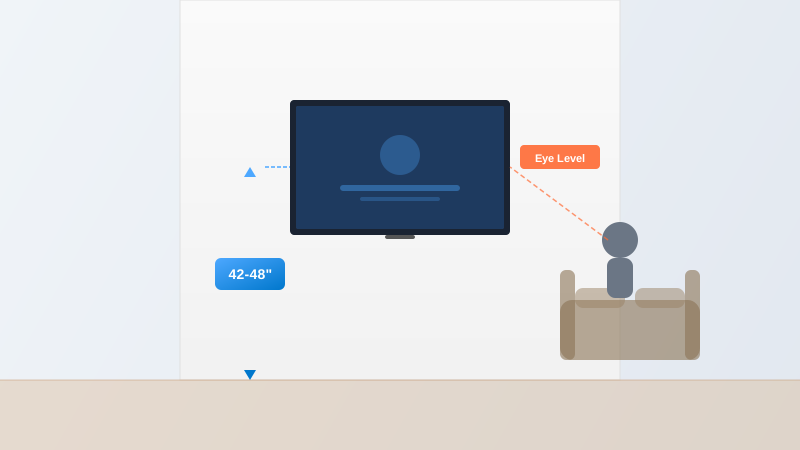
| Viewing height | Set to exact eye level | Determined by stand height |
| Storage | None (add a shelf or unit) | Built-in shelves/drawers |
When Should You Wall Mount Your TV?
- You want a clean, minimal look with no visible cables
- You have small children or pets
- The room is compact and floor space matters
- You've settled on your room layout and won't be moving the TV
- You want the screen at the perfect viewing height
When Should You Use a TV Stand?
- You're renting and can't drill into walls
- You rearrange rooms frequently
- You need storage space for consoles, receivers, or media
- The wall behind the TV position is not suitable for mounting (cavity walls with no studs, artex, or very uneven surfaces)
Not Sure Which Suits Your Room?
We're happy to take a look and give honest advice. If wall mounting isn't the right option for your wall or your room, we'll say so. There's no hard sell. If it is, we'll get it done properly with a bracket matched to your TV, cables hidden, and the screen positioned at the right height.
TV wall mounting starts from £100 across Colchester and Essex. Call Roger on 07860 645446 or get a free quote.