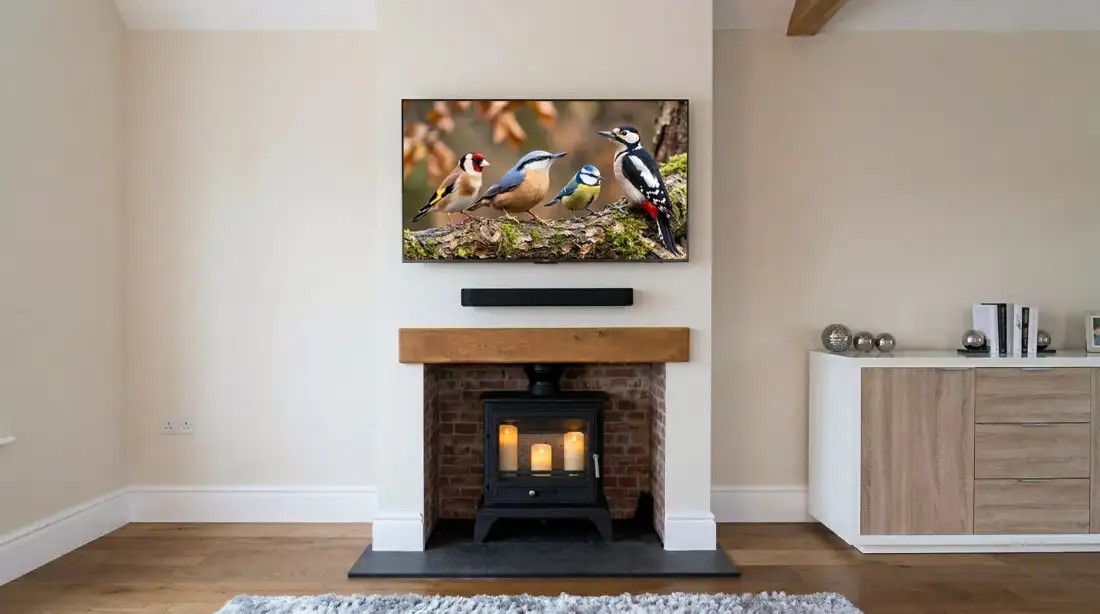
The Short Answer
Yes. A TV above the fireplace is one of the most requested installs we do, and for good reason. It puts the screen front and centre without eating into floor space or blocking the fire. But it's not quite the same job as mounting on a plain wall. Heat clearance, viewing height and cable routing all need a bit more thought.
Get those three things right and it looks brilliant. Get them wrong and you end up with a TV that's too high to watch comfortably, or cables running down the wall in full view.
Is It Safe to Mount a TV Above a Fire?
It depends on what kind of fire is underneath. Gas fires and electric fires run relatively cool, and a TV mounted a sensible distance above with normal clearance is usually no problem at all.
Wood-burning stoves and open fires are a different matter. They throw off a lot more radiant heat, and that heat rises straight up the chimney breast towards wherever the TV is mounted. If you've got a log burner, it's worth leaving extra clearance above the fire opening and checking your TV's manual for its operating temperature range. When in doubt, a heat-resistant shield behind the TV or extra standoff distance from the wall is the sensible route; not something to guess at.
DIY or Call a Professional?
Mounting above a fireplace is a job worth getting assessed properly, more so than a plain wall install:
- You're not sure how much heat clearance is safe for your fire type
- The chimney breast is solid masonry and cables need chasing in and re-plastering
- You want a tilting or full-motion bracket to correct the viewing angle
- There's a mantel, alcoves or a feature wall to work around
Roger has fitted hundreds of TVs above fireplaces across Essex, from simple brick chimney breasts to full room builds. Get a free quote.
What's Behind the Chimney Breast?
A chimney breast is usually solid brick or block, which gives a strong, straightforward fixing for the bracket. Some fireplaces are boxed in or extended with a plasterboard-clad surround either side. If that's the case for your wall, our plasterboard mounting guide covers the fixings you need instead of standard wall plugs.
Either way, a stud finder or a look at the fireplace's construction will tell you what you're dealing with before you commit to drilling.
Getting the Height and Viewing Angle Right
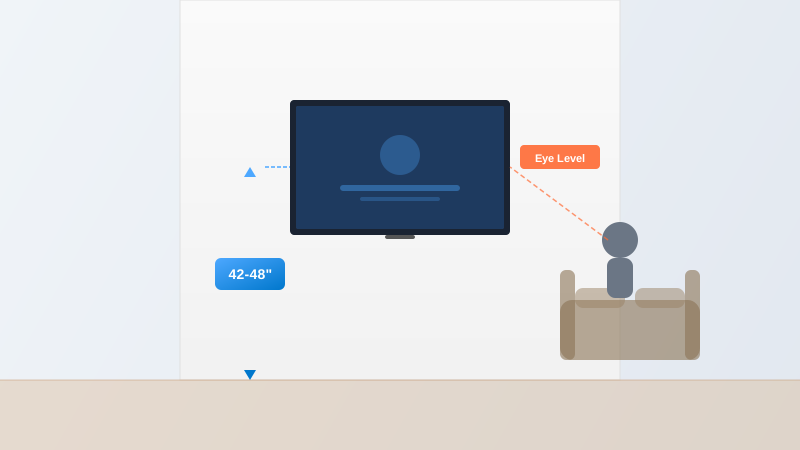
A fireplace almost always pushes the TV higher than the ideal eye-level height covered in our TV mounting height guide. The mantel, hearth and fire surround simply don't leave room to mount it lower. That's fine, but it changes the bracket you should use.
Once the screen is above eye level, a fixed bracket leaves you looking up at an angle, which gets uncomfortable over a film-length sitting. A tilting bracket that angles the screen down 5-15 degrees towards the sofa fixes this. See our bracket guide for the difference between fixed, tilt and full-motion options.
Hiding the Cables Through the Chimney Breast
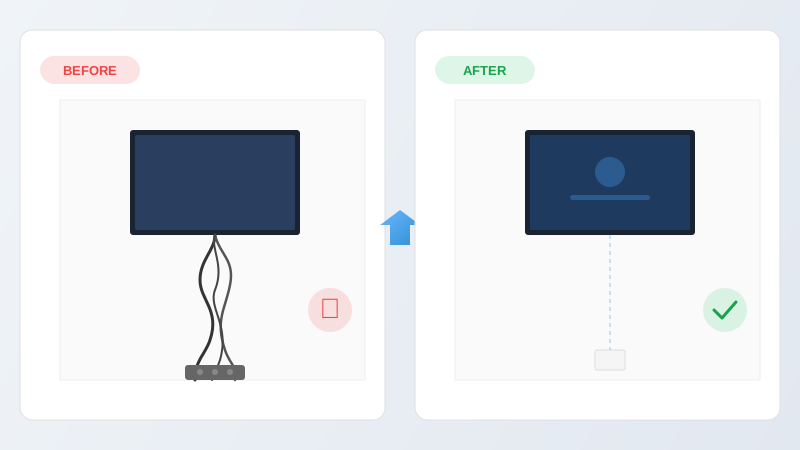
The last thing you want after all that is a TV that looks great but has cables trailing down past the fire. On a brick chimney breast, cables are typically chased into the masonry and routed down to a recessed back box beside the fireplace surround or at skirting level. On a plasterboard-clad breast, they can often be fed through the cavity instead. Our cable-hiding guide covers all five methods and what each one costs.
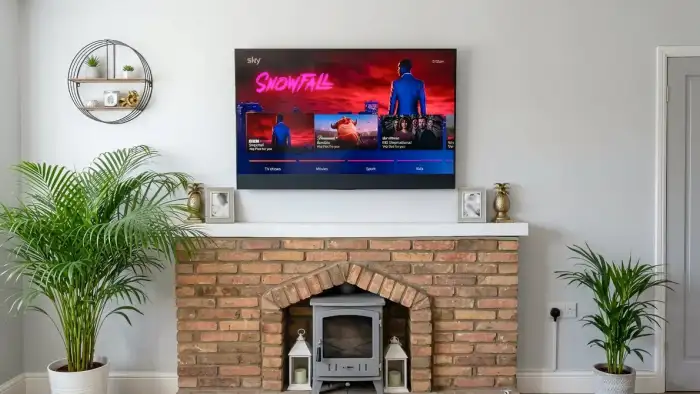
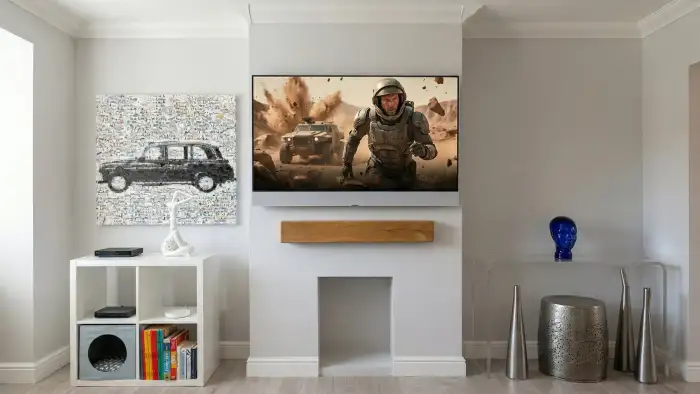
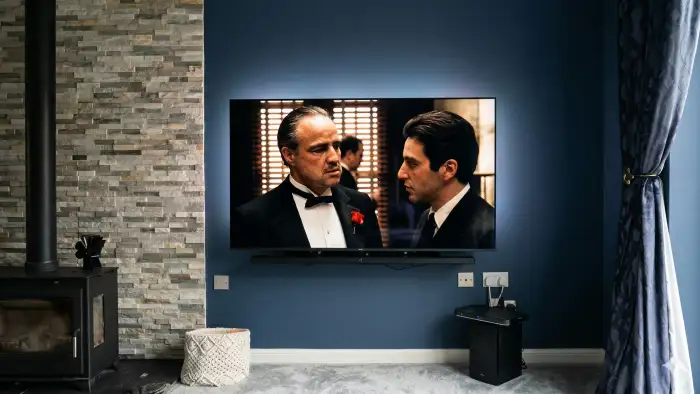
Real Fireplace TV Mounts We've Done in Essex
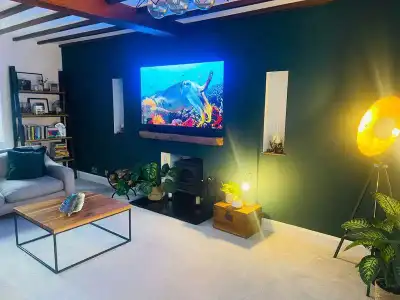
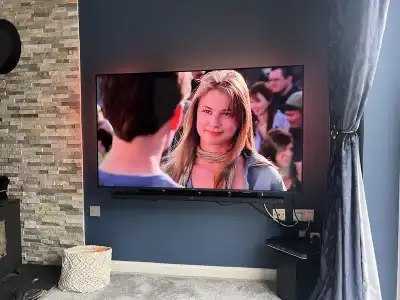
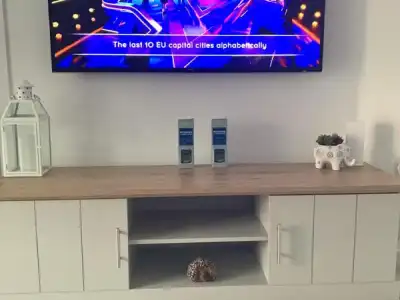
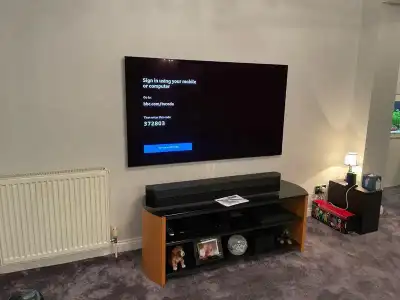
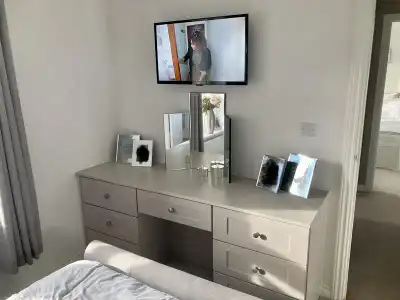
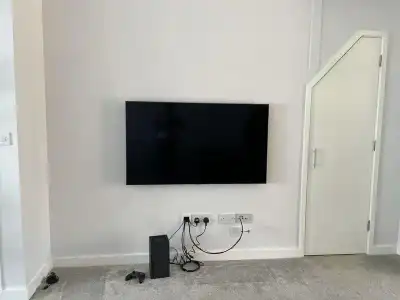
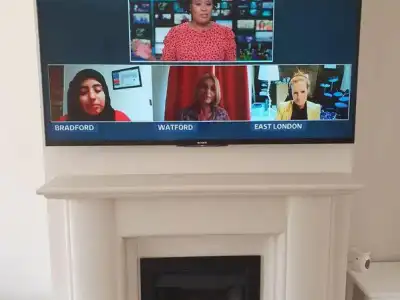
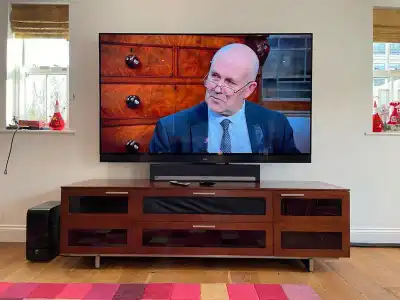
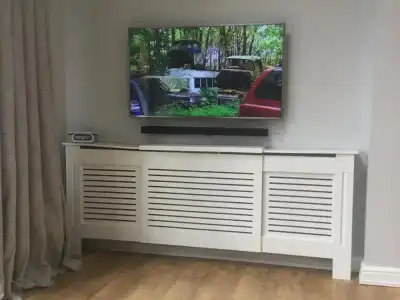
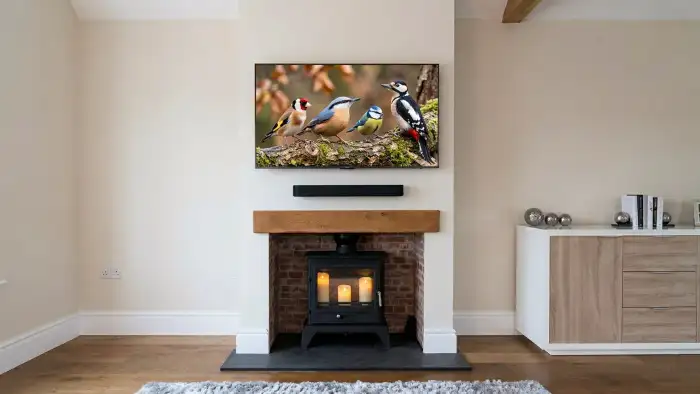
A few recent examples of TVs mounted above a fireplace, each with a different wall type and finish:
Want It Done Properly?
Fireplace installs are one of the jobs where getting a professional in pays off. The wrong heat clearance or the wrong bracket is a lot more hassle to fix than a plain wall mount. Roger has 30+ years' experience across Colchester, Chelmsford, Braintree, Loughton and the rest of Essex assessing exactly this.
He'll check the fire type and clearance, choose the right bracket for the height, and chase the cables through the chimney breast for a completely clean finish. Chelmsford, Colchester, Clacton. If you're in Essex, we cover you.